When the heat hits: keeping birds on track
- Poultry
As temperatures rise, chickens face greater challenges in maintaining their body temperature and dissipating excess heat.

Heat stress is increasingly becoming a practical challenge on poultry farms.
As soon as temperatures rise, birds must work harder to lose excess body heat. During acute heat stress, often from around 28 °C, birds start panting more. As a result, they lose additional water and minerals. During longer periods of warm weather, already from around 21 °C, feed intake, gut health, resilience and product quality increasingly come under pressure.
In practice, it starts with carefully observing the house: birds eat less, drink more, pant, move less and the differences within the flock may become larger. Lower feed intake also means lower intake of energy, amino acids, minerals and vitamins by the individual bird. On warm days in particular, the bird needs support to help maintain feed intake and health, while a consistent approach helps preserve flock uniformity
Farm-O-San AHS is intended for acute heat stress and is administered via the drinking water.
The practical dosage is 1 kg per m³ of drinking water. The product contains electrolytes, sodium bicarbonate, vitamin C, magnesium fumarate and mint. Together, these ingredients support the bird when it matters most: during warm days or heat peaks when birds are visibly struggling to lose excess heat.
Electrolytes are important because panting causes birds to lose additional minerals. This can affect water balance, muscle function, feed intake and overall vitality. Support via drinking water is practical, because heat periods often develop quickly. Through the water line, you can respond faster than by adjusting the feed.
Vitamin C helps support the stress response and antioxidant status. Magnesium supports mineral balance. Mint may contribute to vitality, breathing comfort and eating behaviour. The strength of Farm-O-San AHS therefore does not lie in one single ingredient, but in the combined support for osmoregulation, stress and feed intake.
However, Farm-O-San AHS does not replace good management. On warm days, always check ventilation, water pressure, water quality, water temperature, stocking density and feeding times. Make sure birds can drink easily and limit additional stress moments. During persistent heat, a broader feed strategy may also be needed, for example with attention to energy, electrolytes and antioxidants.
Practical message: heat stress calls for preparation, not correction afterwards. Discuss warm days with the poultry farmer in time, check water and house management, and use Farm-O-San AHS in a targeted way around forecast heat peaks. This supports the bird when pressure is highest and helps the flock come through warm periods more effectively, while maintaining intake, health, performance and uniformity.
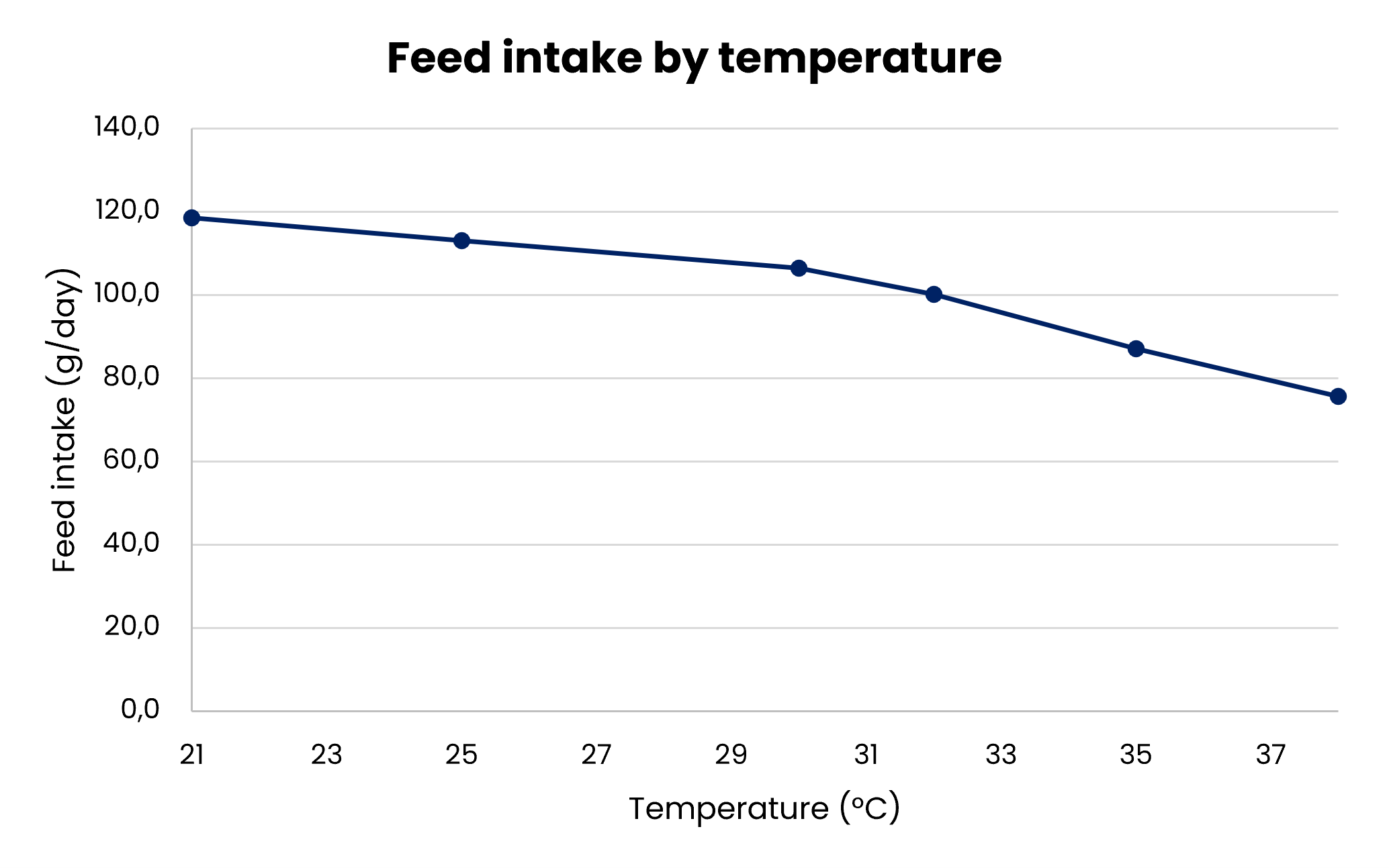
Figure 1. Effect of increasing ambient temperature on feed intake in laying hens. As temperature rises, feed intake clearly decreases. This shows why birds take in fewer nutrients during warm periods, while their need for support actually increases
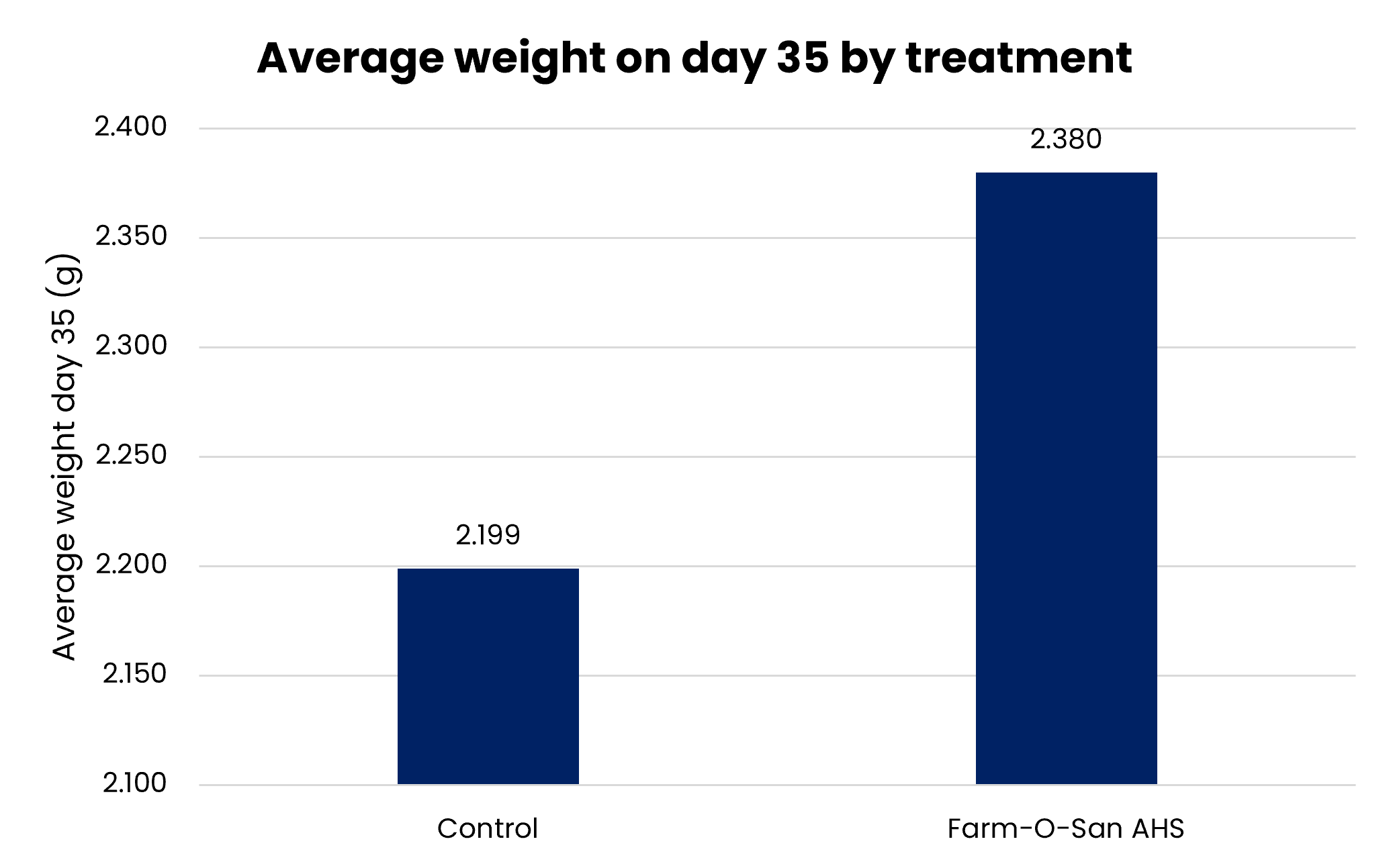
Figure 2. Average body weight at day 35 in the Belgian broiler trial. In this trial, the Farm-O-San AHS treatment showed the highest final body weight, underlining the practical value of targeted support during acute heat stress.