Trace minerals: first-cut silage analysis does not tell the whole story
- Ruminants
A mineral analysis of just one silage pit does not always provide a reliable picture of the mineral supply. Research shows that differences between silage pits can be substantial.

Not all silage is the same: why a single analysis is no longer sufficient
An increasing number of dairy farmers are having trace elements analysed in their roughage. This is a positive development, as the correct mineral balance is essential for animal health and performance. In practice, however, we see that this analysis is often limited to the first cut or a ‘lasagne’ silage. This means that an important part of the picture is missed.
Recent findings show that the levels of minerals and trace elements in grass silage have come under pressure in recent years. At the same time, there is considerable variation between silage batches. Managing on the basis of averages therefore carries risks, particularly when rations are largely based on one or just a few silage batches.
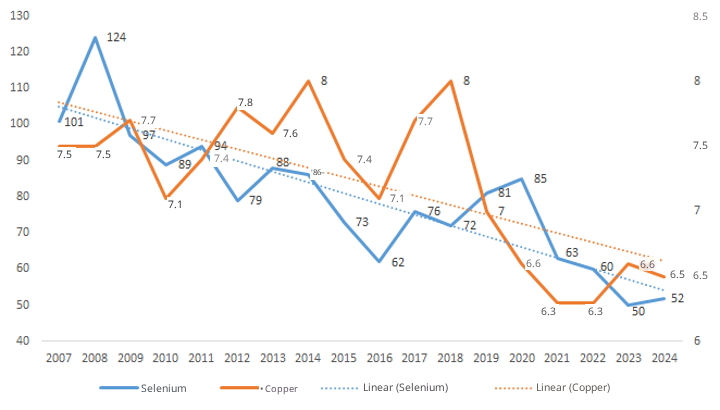
Figure 1. Average selenium and copper content in Dutch spring silage. Source: Eurofins Agro 2025
An often underestimated factor: the cut
Multi-year data show that levels of copper (Cu), zinc (Zn) and manganese (Mn) vary between spring, summer and autumn silage:
- In spring, levels are often lower due to rapid growth and a dilution effect.
- In summer, levels become more stable, but variation between plots increases.
In autumn, lower yields and less dilution result in higher concentrations per kg of dry matter.
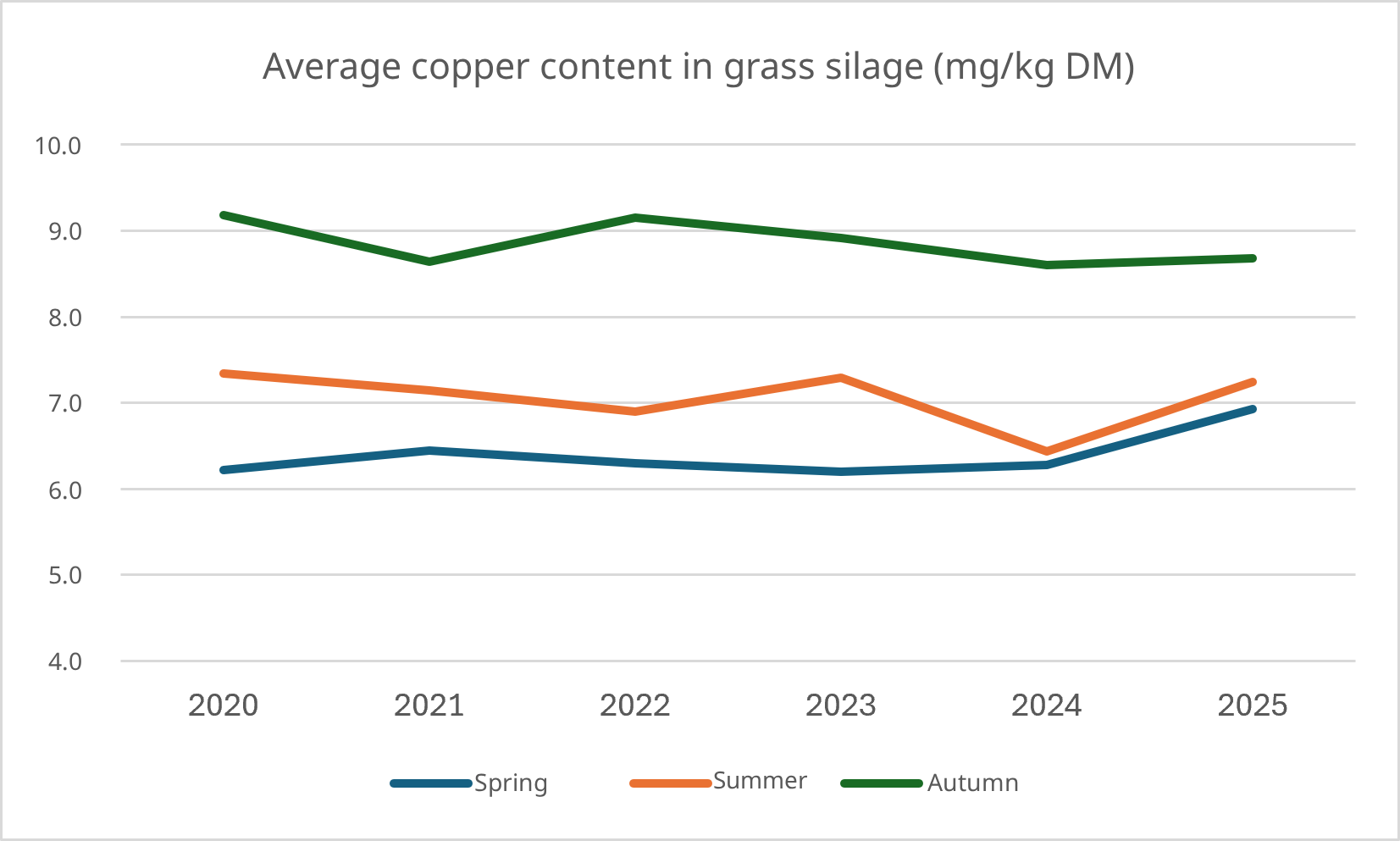
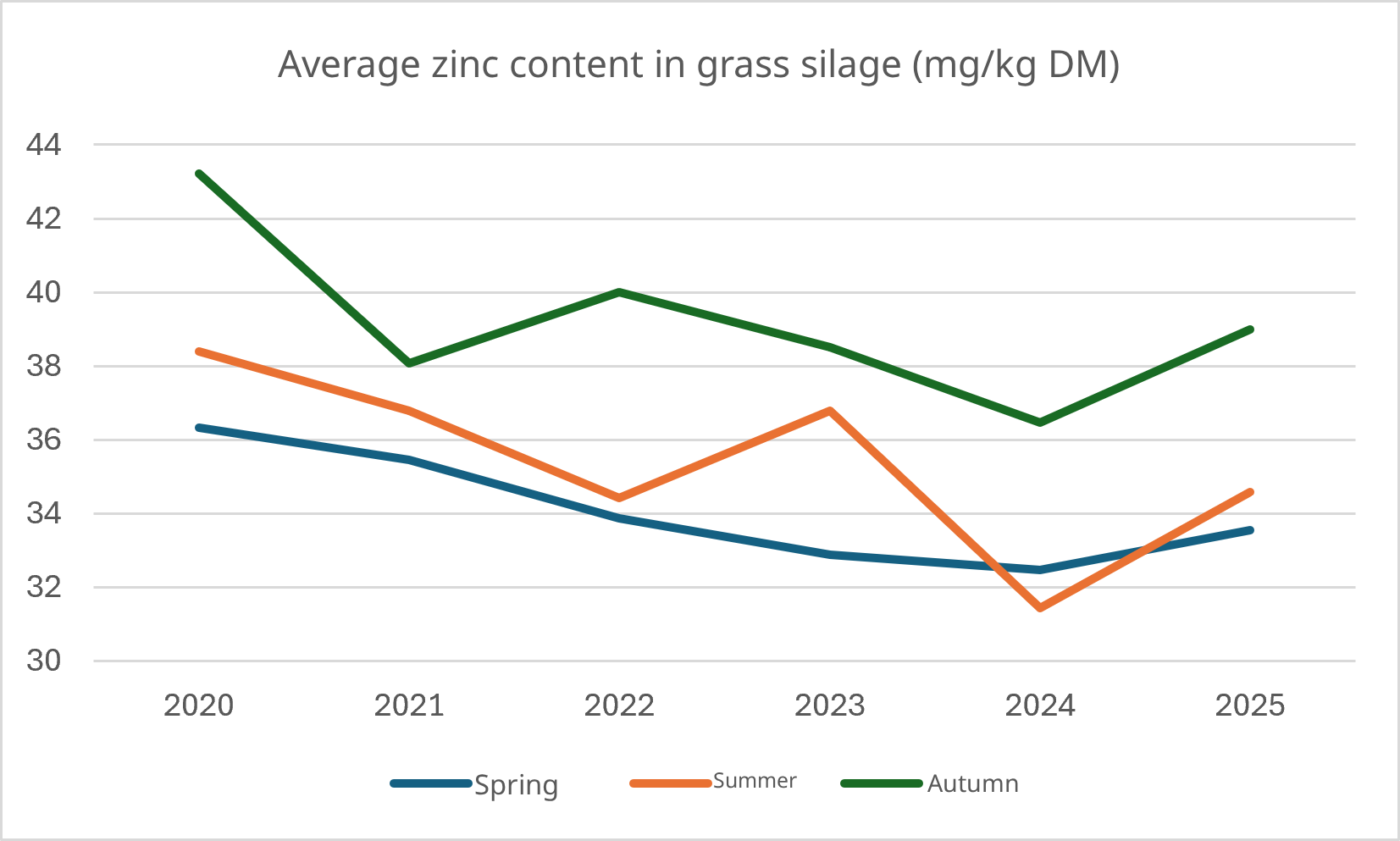
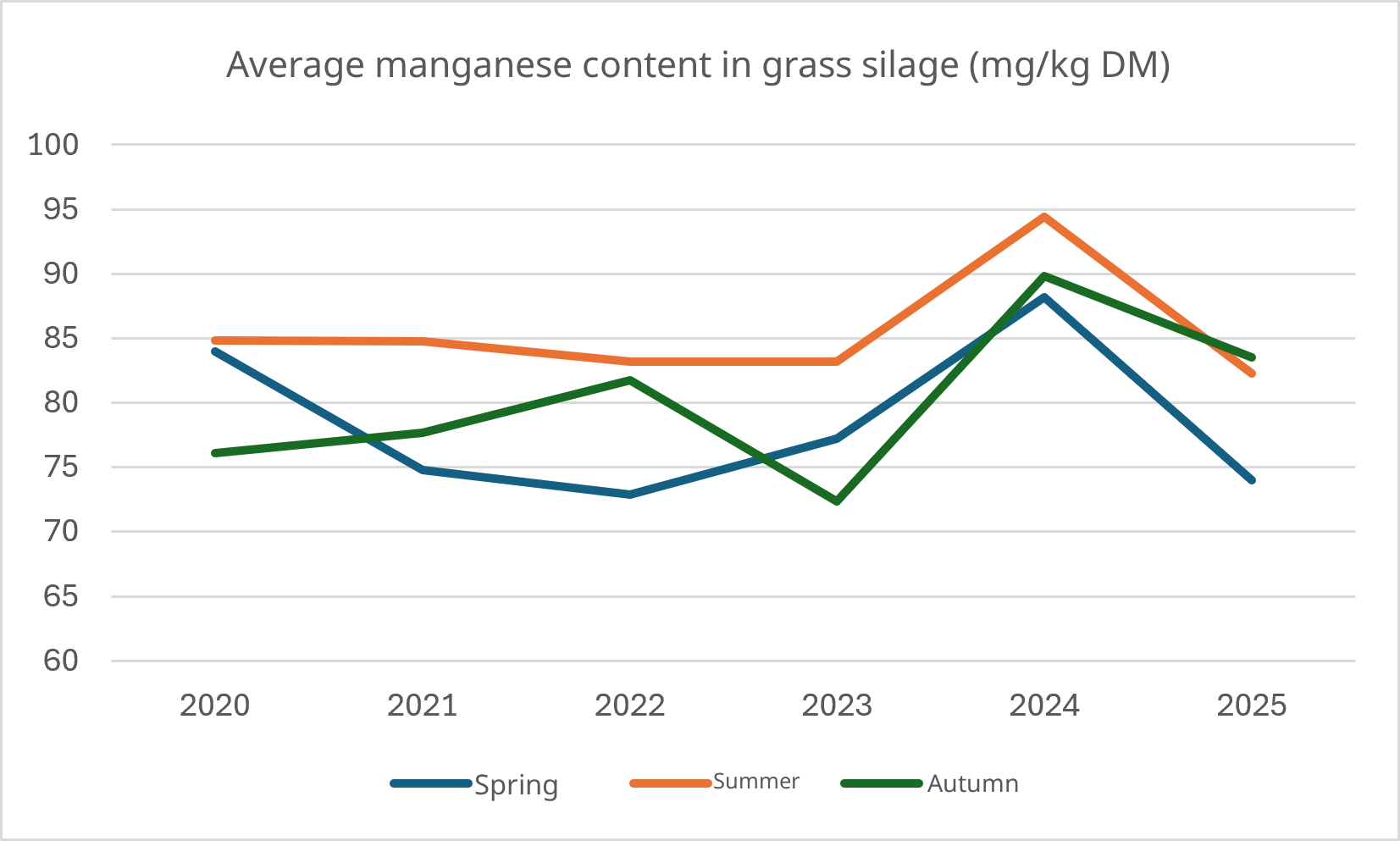
Figure 2. Seasonal effects on trace mineral contents of grass silage (spring: March–May; summer: June–August; autumn: September–November). Source: Dumea, 2026
Table 1. Seasonal averages (2020–2026) of trace minerals in grass silage (spring: March–May; summer: June–August; autumn: September–November). Source: Dumea 2026
Averages (2020–2025) per trace mineral (mg/kg DM)
| Spring | Summer | Autumn | |
| Copper | 6,4 | 7,0 | 8,8 |
| Manganese | 78 | 86 | 81 |
| Zinc | 34 | 35 | 39 |
Why do silage pits vary from season to season?
- In spring, the soil is still cold, which limits the release of minerals.
- In summer, mineralisation increases and the availability of minerals from the soil becomes more stable.
- In autumn, grass growth slows down, causing minerals to become more concentrated in the dry matter.
Why a single silage analysis may not be sufficient
The differences between silage cuts can be just as great as the differences between farms. Consequently, applying the results of a single trace mineral analysis to other silage samples does not provide a reliable picture of the actual mineral supply from these silages in a ration.
Practical advice for the ration
- Do not analyse only the first cut, but also the silage that is actually being fed.
- Use the analysis to tailor supplementation more accurately to the current mineral supply. This can be done by:
o Adjusting the quantity of minerals
o Adjusting the type of mineral, customised meal or pellets
o Choosing reliable sources such as Selko IntelliBond®, which offer better bioavailability when supplementation is limited or antagonists are present. - Pay particular attention to copper, zinc and manganese, as these elements can vary significantly depending on the silage harvest period.
To measure is to know – but only if you measure the right silage.